
Your shopping cart is currently empty.
Method Books for Orchestra
- Essential Elements for Strings
- Essential Technique for Strings
- Habits of a Successful String Musician
- Measures of Success for Orchestra
- String Basics
- Suzuki Violin School
-
 Suzuki Viola School Volume 4 0244SThe Suzuki Method is based on the principle that all children possess ability and that this ability can be developed and enhanced through a nurturing environment. All children learn to speak their own language with relative ease and if the same natural learning process is applied in teaching other skills, these can be acquired as successfully. Suzuki referred to the process as the Mother Tongue Method and to the whole system of pedagogy as Talent Education. The important elements of the Suzuki approach to instrumental teaching include the following:an early start (aged 3-4 is normal in most countries); the importance of listening to music; learning to play before learning to read; -the involvement of the parent; a nurturing and positive learning environment; a high standard of teaching by trained teachers; the importance of producing a good sound in a balanced and natural way; core repertoire, used by Suzuki students across the world; social interaction with other children. Suzuki students from all over the world can communicate through the language of music.Price: $14.99
-
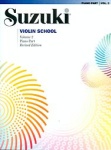 Suzuki Violin School Piano Acc. 2 30098The Suzuki Method is based on the principle that all children possess ability and that this ability can be developed and enhanced through a nurturing environment. All children learn to speak their own language with relative ease and if the same natural learning process is applied in teaching other skills, these can be acquired as successfully. Suzuki referred to the process as the Mother Tongue Method and to the whole system of pedagogy as Talent Education. The important elements of the Suzuki approach to instrumental teaching include the following:an early start (aged 3-4 is normal in most countries); the importance of listening to music; learning to play before learning to read; -the involvement of the parent; a nurturing and positive learning environment; a high standard of teaching by trained teachers; the importance of producing a good sound in a balanced and natural way; core repertoire, used by Suzuki students across the world; social interaction with other children. Suzuki students from all over the world can communicate through the language of music./p/divPrice: $14.99
-
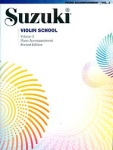 Suzuki Violin School Piano Acc. 3 30099The Suzuki Method is based on the principle that all children possess ability and that this ability can be developed and enhanced through a nurturing environment. All children learn to speak their own language with relative ease and if the same natural learning process is applied in teaching other skills, these can be acquired as successfully. Suzuki referred to the process as the Mother Tongue Method and to the whole system of pedagogy as Talent Education. The important elements of the Suzuki approach to instrumental teaching include the following:an early start (aged 3-4 is normal in most countries); the importance of listening to music; learning to play before learning to read; -the involvement of the parent; a nurturing and positive learning environment; a high standard of teaching by trained teachers; the importance of producing a good sound in a balanced and natural way; core repertoire, used by Suzuki students across the world; social interaction with other children. Suzuki students from all over the world can communicate through the language of music./p/divPrice: $14.99
-
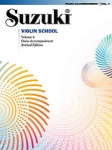 Suzuki Violin School Vol 4 Piano Acc 32089The Suzuki Method is based on the principle that all children possess ability and that this ability can be developed and enhanced through a nurturing environment. All children learn to speak their own language with relative ease and if the same natural learning process is applied in teaching other skills, these can be acquired as successfully. Suzuki referred to the process as the Mother Tongue Method and to the whole system of pedagogy as Talent Education. The important elements of the Suzuki approach to instrumental teaching include the following:an early start (aged 3-4 is normal in most countries); the importance of listening to music; learning to play before learning to read; -the involvement of the parent; a nurturing and positive learning environment; a high standard of teaching by trained teachers; the importance of producing a good sound in a balanced and natural way; core repertoire, used by Suzuki students across the world; social interaction with other children. Suzuki students from all over the world can communicate through the language of music./p/divPrice: $14.99
-
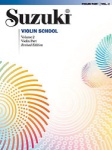 Suzuki Violin School Volume 2 0146SThe Suzuki Method is based on the principle that all children possess ability and that this ability can be developed and enhanced through a nurturing environment. All children learn to speak their own language with relative ease and if the same natural learning process is applied in teaching other skills, these can be acquired as successfully. Suzuki referred to the process as the Mother Tongue Method and to the whole system of pedagogy as Talent Education. The important elements of the Suzuki approach to instrumental teaching include the following:an early start (aged 3-4 is normal in most countries); the importance of listening to music; learning to play before learning to read; -the involvement of the parent; a nurturing and positive learning environment; a high standard of teaching by trained teachers; the importance of producing a good sound in a balanced and natural way; core repertoire, used by Suzuki students across the world; social interaction with other children. Suzuki students from all over the world can communicate through the language of music.Price: $14.99
-
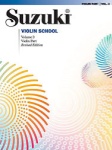 Suzuki Violin School Volume 3 0148SThe Suzuki Method is based on the principle that all children possess ability and that this ability can be developed and enhanced through a nurturing environment. All children learn to speak their own language with relative ease and if the same natural learning process is applied in teaching other skills, these can be acquired as successfully. Suzuki referred to the process as the Mother Tongue Method and to the whole system of pedagogy as Talent Education. The important elements of the Suzuki approach to instrumental teaching include the following:an early start (aged 3-4 is normal in most countries); the importance of listening to music; learning to play before learning to read; -the involvement of the parent; a nurturing and positive learning environment; a high standard of teaching by trained teachers; the importance of producing a good sound in a balanced and natural way; core repertoire, used by Suzuki students across the world; social interaction with other children. Suzuki students from all over the world can communicate through the language of music.Price: $14.99
-
 Suzuki Violin School Volume 4 0150SThe Suzuki Method is based on the principle that all children possess ability and that this ability can be developed and enhanced through a nurturing environment. All children learn to speak their own language with relative ease and if the same natural learning process is applied in teaching other skills, these can be acquired as successfully. Suzuki referred to the process as the Mother Tongue Method and to the whole system of pedagogy as Talent Education. The important elements of the Suzuki approach to instrumental teaching include the following:an early start (aged 3-4 is normal in most countries); the importance of listening to music; learning to play before learning to read; -the involvement of the parent; a nurturing and positive learning environment; a high standard of teaching by trained teachers; the importance of producing a good sound in a balanced and natural way; core repertoire, used by Suzuki students across the world; social interaction with other children. Suzuki students from all over the world can communicate through the language of music.Price: $14.99
-
 Suzuki Violin School Volume 5 0152SThe Suzuki Method is based on the principle that all children possess ability and that this ability can be developed and enhanced through a nurturing environment. All children learn to speak their own language with relative ease and if the same natural learning process is applied in teaching other skills, these can be acquired as successfully. Suzuki referred to the process as the Mother Tongue Method and to the whole system of pedagogy as Talent Education. The important elements of the Suzuki approach to instrumental teaching include the following:an early start (aged 3-4 is normal in most countries); the importance of listening to music; learning to play before learning to read; -the involvement of the parent; a nurturing and positive learning environment; a high standard of teaching by trained teachers; the importance of producing a good sound in a balanced and natural way; core repertoire, used by Suzuki students across the world; social interaction with other children. Suzuki students from all over the world can communicate through the language of music.Price: $14.99
-
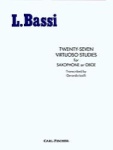 Twenty-Seven Virtuoso Studies For Saxophone Or Obo O61Twenty-Seven Virtuoso Studies (For Saxophone or Oboe). By Luigi Bassi (1766-1825). For Saxophone, Oboe. Softcover. Standard notation. 67 pages. Published by Carl Fischer (CF.O61).Price: $18.99
-
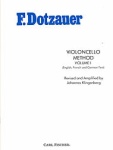 Violoncello Method Vol. 1 O3674Violoncello Method-Vol. 1 (Volume I (English, French and German Text)). By Justus Johann Friedrich Dotzauer. Edited by Johannes Klingenberg. For Cello. Student book. Standard notation. 47 pages. Published by Carl Fischer (CF.O3674).Price: $11.50